How to Create a Parish Content Calendar
"CAUTION: Dates on calendar are CLOSER than they appear." Anonymous
There are so many places where a parish needs content:
the bulletin
social media
the website
the e-newsletter
the blog
And then comes the question: What are we going to share?
It can feel like a lot.
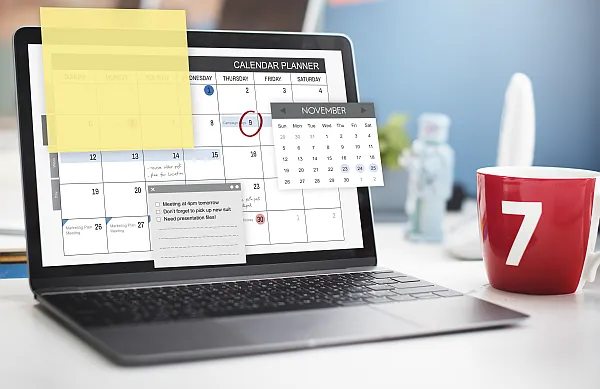
A simple content calendar can make it much easier. Instead of deciding at the last minute what to post on Facebook or scrambling to fill an empty space in the bulletin, you can plan ahead and know what's coming.
Here are five simple steps to get started.
Step 1 - Start With a Blank Calendar Page
This really can be as simple as it sounds.
Print a calendar for the month you are planning.
Step 2 - Fill in the Calendar
There are a number of different categories you can use to help fill in your monthly calendar.
I generally start with the liturgical calendar to see what the "big" days are in the month I'm planning.
Look for things like:
Solemnities
Major feast days
Memorials
The beginning or end of a liturgical season
Other important moments in the Church year
Depending on the month, this might include Pentecost, the Solemnity of Christ the King, Ash Wednesday, Easter Sunday or the return to Ordinary Time.
The USCCB Liturgical Year and Calendar is a great resource for identifying important Church dates.
Saints' Feast Days
Next, look at the saints, blesseds, and venerables celebrated during the month.
You might choose:
Well-known saints
Saints connected to your country or community
Your parish's patron saint
Saints connected to a ministry in your parish
A saint, blessed or venerable your parishioners may not know
They all have interesting stories, and sharing them is a wonderful way to introduce people to the richness of our Catholic faith.
Two excellent resources are Franciscan Media's Saint of the Day and the Vatican's Saint of the Day - Calendar of Saints.
Secular Holidays and Seasonal Moments
Not everything on your parish content calendar has to begin with the liturgical calendar.
Look for secular holidays and seasonal moments that provide a natural opportunity to connect everyday life with our Catholic faith.
These might include:
National holidays
Family-focused days such as Mother’s Day or Father’s Day
Seasonal milestones like the first day of summer
Other days that are particularly meaningful in your community
You can find a full list of secular holidays for any year on sites such as timeanddate.com.
Parish Happenings
Now look at what's actually happening in your parish.
Ask yourself:
Are there First Communions or Confirmations?
Is there a school Mass or end-of-year celebration?
Is there a parish picnic or special event?
Is a new ministry beginning?
Is your priest or deacon celebrating an ordination anniversary or birthday?
Are there photos from a recent parish event that you could share?
This is an important part of the calendar because it helps your communications reflect the life of your particular parish.
Miscellaneous
This category is your secret weapon.
It's where you can fill some of the remaining spaces on your calendar with useful, interesting or inspiring Catholic content.
It can include:
Quotes or short reflections
Catholic FAQs
Prayers
Book, movie or podcast recommendations
Catholic videos
Virtual tours
Catholic places to visit
Interesting Catholic facts
Practical ways to live the faith at home
You don't need to use all of these every month. They're simply places to look when you need another good idea.
Step 3 - What? Where? How?
Once you’ve identified content for each day, it’s time to decide:
What are you posting?
Where will it appear?
How will it be presented?
Once you have an idea of content for each day, you then need to decide where you will use it.
For example:
Create daily posts for your social media, which you could also send out in an e-blast?
Write a few short blurbs for your parish bulletin and then also use them on your social media or on your website.
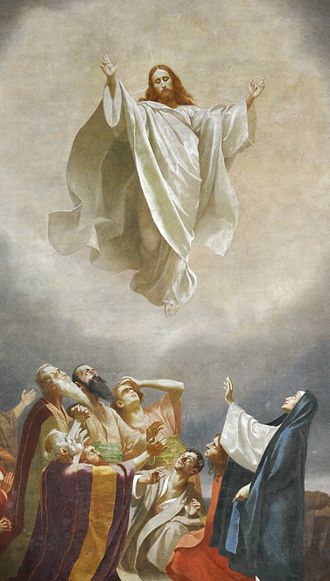
Next you have to think about how you will present each piece of content. For instance, there are many beautiful paintings of the Ascension that are in the public domain (Christi Himmelfahrt by Gebhard Fugel, c. 1893) combine that with a quote from the gospel and voilà!
For saints, I often:
Use a public-domain image plus a quote
Share a short YouTube video (there are many good ones)
One of my other favorite go tos is a virtual tour! For instance, you could suggest people take a virtual tour of St. Peter's Basilica as well as St. Paul Outside the Walls for the Solemnity of Saints Peter and Paul on June 29th.
For secular events, I often search the event name along with the word Catholic to see if there is a natural connection. or secular events like the Belmont Stakes for example, I turn to Google and type in the word Catholic along with the event to see if anything comes up. That's how I found the story of Catholic Jockey and Triple Crown winner Mike Smith when I needed something for the Kentucky Derby.
And if you’re stuck, you can always ask ChatGPT to help you find a Catholic connection.
Step 4 - Make the Content Look Pretty
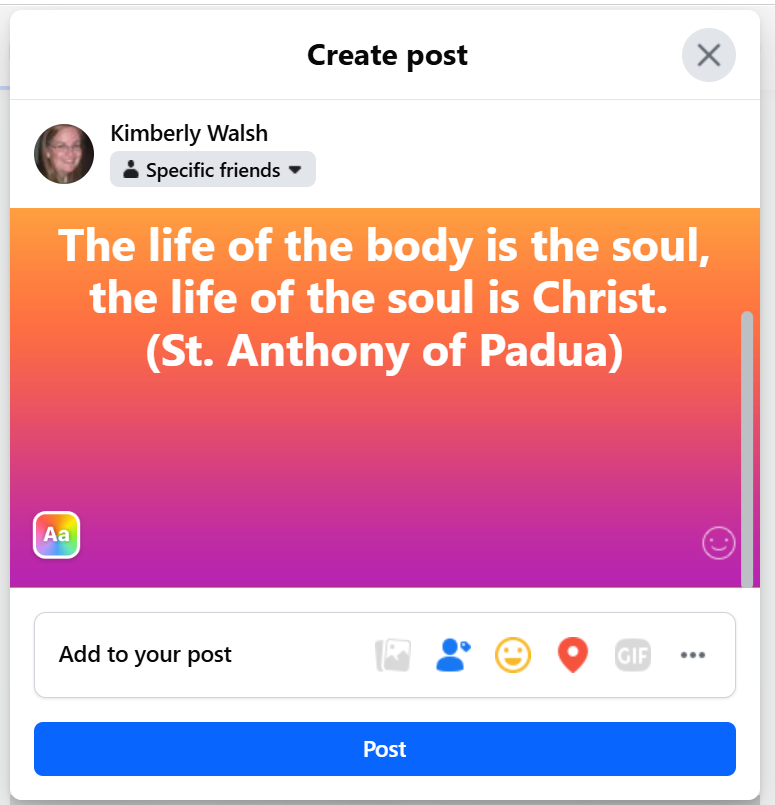
The best place to do this is in Canva! This particular step will probably take the longest. But if If Canva feels like too much you can:
Share a public-domain image with a caption.
Post a relevant YouTube video or article.
Use Facebook’s built-in background feature for quotes or Scripture (see photo)
Remember - simple content, shared consistently, is far better than perfect content that never gets posted.
Step 5 - Post & Print
Finally, post and/or print your content:
Captions
Images
Videos,
Quotes
You’ve done the hard work — now let it be seen.
Final Thoughts
A content calendar may feel overwhelming - and yes, it is a bit of work.
But when you break it down, it becomes manageable.
Creating the calendar itself should take about 30 to 40 minutes. Gathering the resources and prettying them up will take longer. But consider working on one week of content at a time.
And remember: you don’t need content every day. Start with one or two days a week and build from there.
👉 To help you get started, download my 2025 list of Catholic feast days and secular holidays — a simple planning tool you can use all year long.
See ya soon!👋